
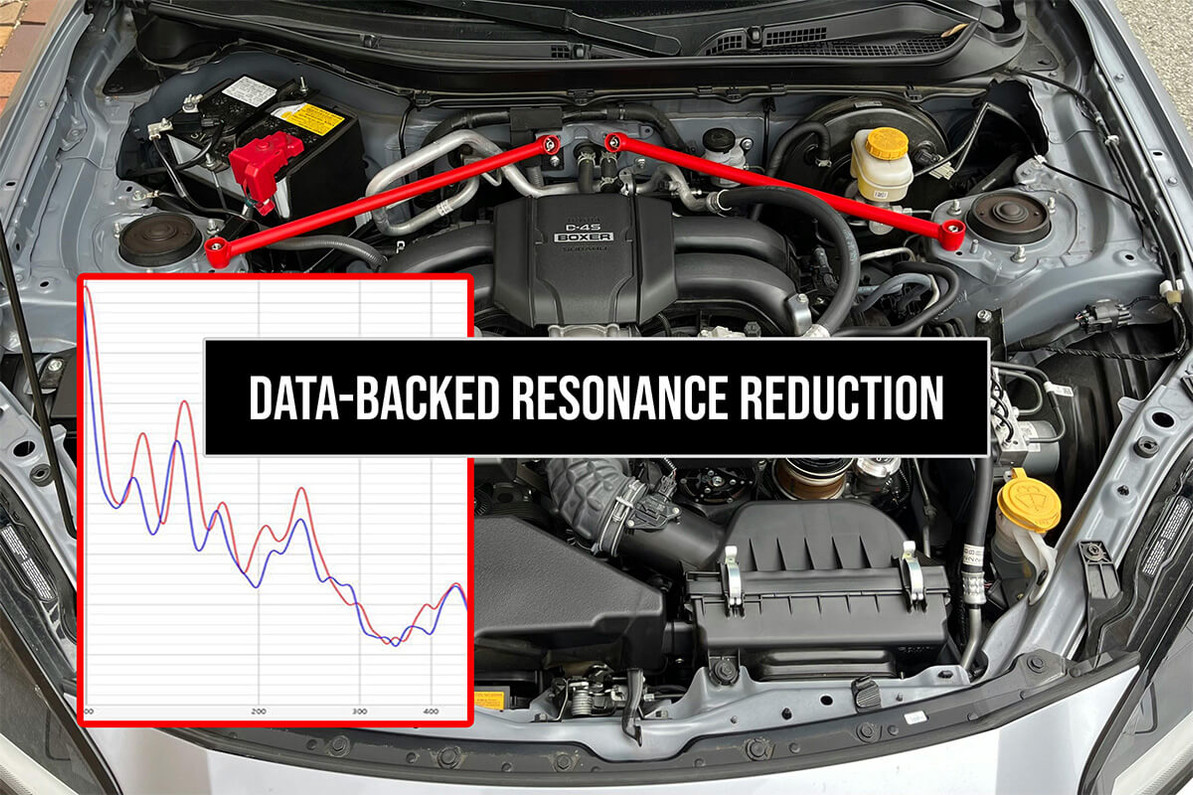
Quieting the GR86 & BRZ: How Firewall V-Braces Reduce Annoying Cabin Resonance
The Toyobaru twins (Toyota GR86 & Subaru BRZ) aren't quiet cars, and no one who buys one should expect the same level of interior refinement and isolation as a Lexus. One of the tradeoffs for them being affordable, lightweight sports coupes is the minimal amount of heavy noise-deadening material added on the assembly line. But, it's still possible to make noticeable improvements without tradeoffs.
The Difference Between Loud and Annoying Noises
On the highway, your ears process various frequencies differently. Low frequencies (under 200 Hz), such as road rumble or exhaust thrum, often fade into the background.
Mid-range frequencies (around 200 Hz to 2,000 Hz) are often what you perceive as an irritating hum or "resonance." This mid-range noise band is particularly important for passengers, as it directly overlaps with the most crucial frequencies for human speech, which are generally between 300 Hz and 3,000 Hz depending on the voice. Since the irritating hum of car resonance sits right in the middle of where we hear and understand voices, reducing this specific noise can make a major difference in how clearly you can hear a conversation or listen to your stereo without having to constantly turn up the volume.
Finally, high frequencies (above 2,000 Hz) are higher-pitched sounds like wind noise around door seals or the HVAC system.
Why Measuring Decibel Reductions Doesn't Tell the Whole Story
You've probably read forum posts or watched videos where people test changing sound deadening, braces, tires, and the like on their cars and then measure the results with a simple decibel meter. Measuring total decibel (or "DB") reductions only tells you if the average or peak (depending on how you're measuring) DB level goes down. A missing aspect of most before-and-after comparisons is measuring which frequencies of sound are reduced. Even if the overall sound level isn't changing much, eliminating a specific, narrow "peak" of noise in that irritating mid-range can make the car feel much quieter and more comfortable, because the human ear tends to notice these specific peaks a lot more than general loudness. In this range people can typically detect changes as small as 1 to 3 dB.
To effectively measure the effect of a particular modification, ideally you need to record the full range of audible frequencies. Here is the testing setup I used:
- Software: Room EQ Wizard (REW)
- Microphone: Dayton UMM-6 Calibration Microphone
- Testing Window: Same day, 45 minutes apart, same stretch of road
- Road Surface: Both asphalt and concrete road surfaces, since resonance is especially bad on concrete
- Environment: No HVAC, no stereo, windows up, traffic avoided
- Placement: Fastened to the passenger headrest (approximating the passenger's left ear)
- Smoothing: 1/12 octave smoothing applied to 200 samples per run
This is Where the Nameless Performance Firewall Braces Come In (available in Red or Black)
After recording my Before measurements, I swapped the stock braces for the Nameless Performance braces. Installation is incredibly easy and should take less than 5 minutes for most people. You remove 8 bolts from the stock braces and install 4 new ones for the Nameless braces. Despite having two mounting points on each end, the stock braces are noticeably flimsier and more hollow-feeling than the Nameless V-Braces.
In the picture below a Nameless V-Brace is on the left and a stock brace is on the right. There's no noticeable difference in engine bay fitment or access to any other parts of the drivetrain.
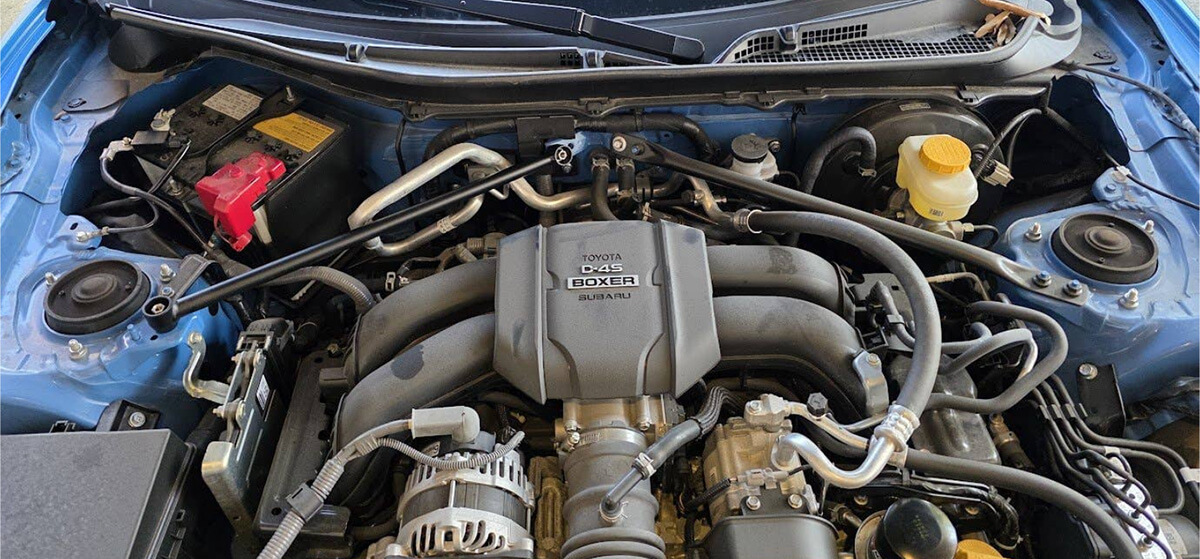
After torquing the bolts to 15 ft/lb, I closed the hood and headed back out to record new sound measurements.
What do the Measurements Tell Us?
First a quick disclaimer: my car isn't your car, and your modifications and environmental variables will affect your results. During the Before and After measurements the car was stock except for aftermarket transmission mount and shifter insert bushings, a stiffer transmission mount bolt, and a HKS single-exit exhaust. I was still using the stock Michelins P4S tires (which are known for their road noise) with roughly six thousand miles on them. The bushing and mount changes transmit more low-frequency transmission noise and vibration into the cabin but at cruising speed I don't notice them compared to the wind and road noise. Still, my car is slightly louder than a showroom stock GR86.
Objective Results
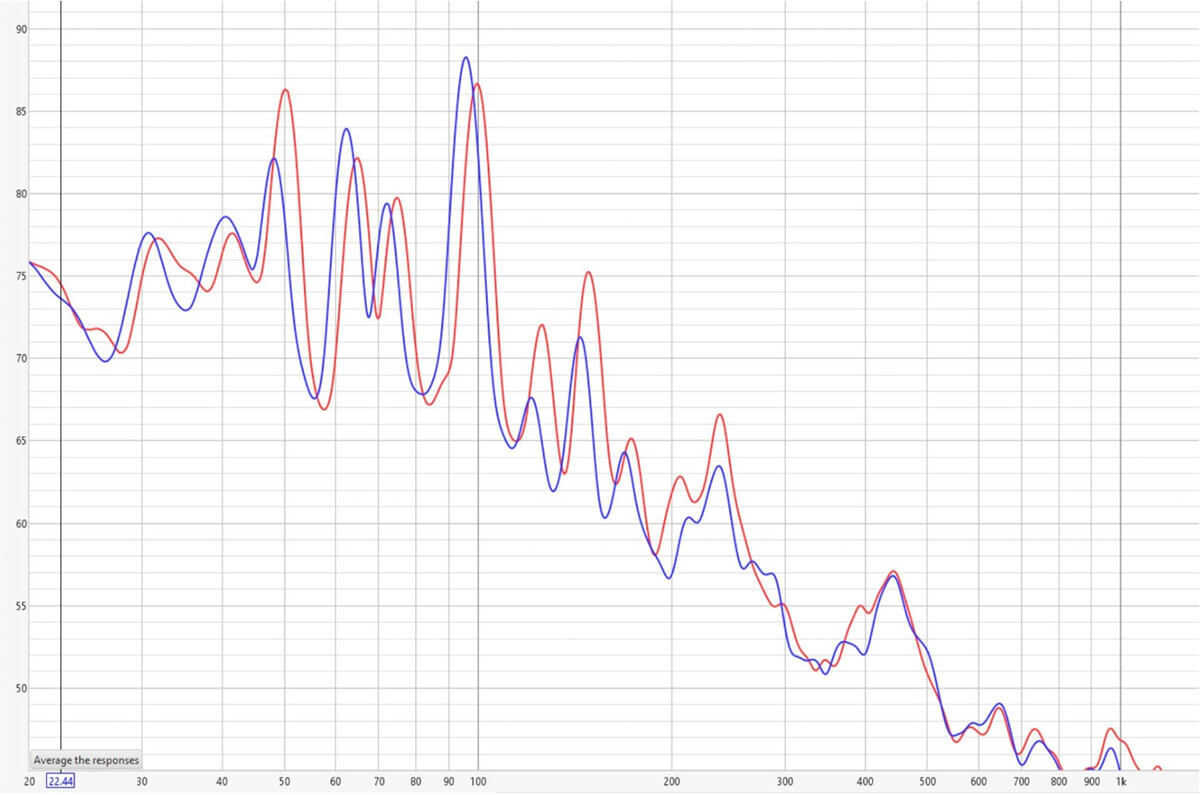
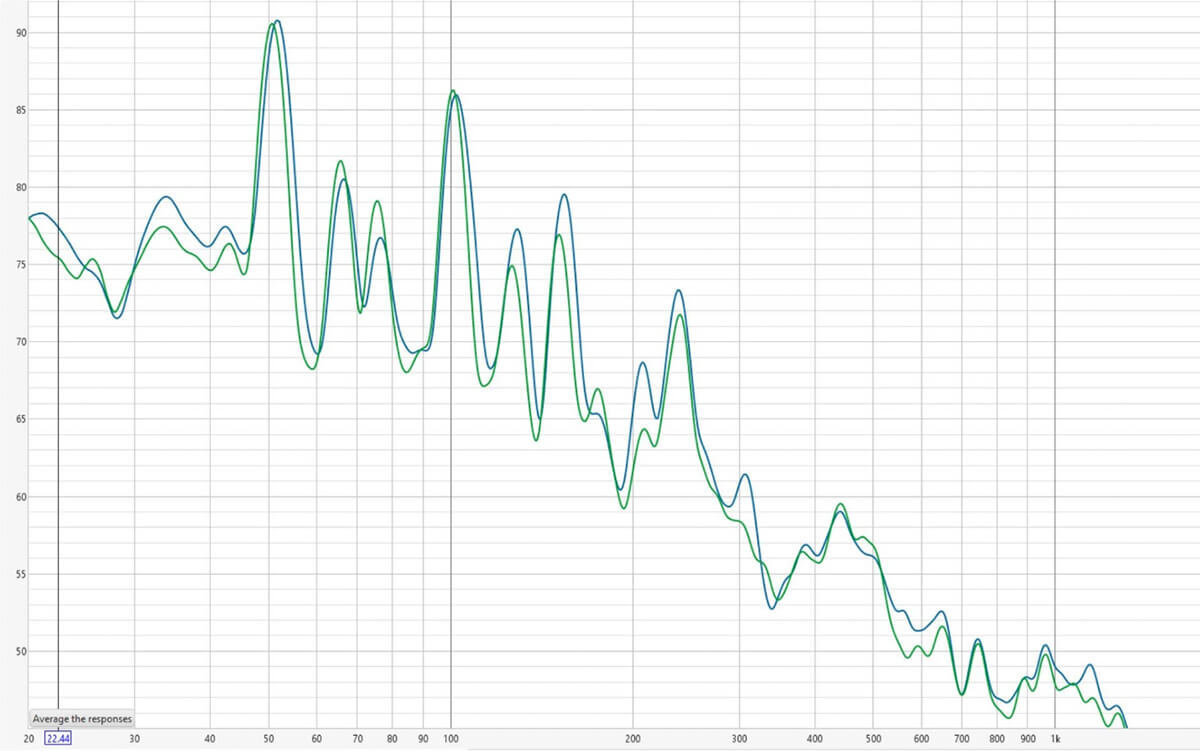
The clearest changes are between approximately 100-300hz, with lower peaks in some of the loudest midrange humming noises. Asphalt saw larger reductions in peaks over that range than concrete, likely due to concrete being a louder road surface. On asphalt the peaks between 100-300hz are reduced by 3-4 DB, and on concrete they are reduced by 2-4 DB. The measurements also show smaller reductions on asphalt around 400hz, and on concrete between 525-650hz.
Subjective Results
The change is immediately noticeable; the car doesn't sound significantly quieter, but it is much less irritating. I turned the stereo down one click, and podcasts and vocals sound a bit clearer with less fatigue. Without telling friends what I'd done, they could tell that something had improved and the cabin was more pleasant to ride in.
| Road Surface | Frequency Range Reduced | Decibel Drop (Peaks) | Subjective Feel |
|---|---|---|---|
| Asphalt | 100 Hz - 300 Hz & ~400 Hz | 3 - 4 dB Drop | Noticeably less irritating; clearer podcasts and music vocals. |
| Concrete | 100 Hz - 300 Hz & 525 Hz - 650 Hz | 2 - 4 dB Drop | Much less irritating; reduced mid-range humming and cabin resonance. |
Is the Change Worth It?
Almost every modification comes with tradeoffs. Stickier tires and free-flowing exhausts are usually louder. Racing seats hug you around corners but make entering and exiting harder.
These braces have no downsides that I've seen after almost 500 miles:
- No change to engine bay access
- Easy to install
- OEM-like appearance depending on which color you choose: Wrinkle Black for a stealth look or Wrinkle Red to make the engine bay pop.
I've completed additional sound deadening to my car after this test to improve the doors and stereo, but these braces were by far the quickest and easiest improvement I've made to interior noise quality.
Ready to eliminate your cabin resonance? Pick your finish:
Shop Red Firewall V-Braces Shop Black Firewall V-Braces
Recent Posts
-
Quieting the GR86 & BRZ: How Firewall V-Braces Reduce Annoying Cabin Resonance
The Toyobaru twins (Toyota GR86 & Subaru BRZ) aren't quiet cars, and no one who buys one should expe …Jun 15, 2026 -
Cornering on Rails: Transform Your Subaru’s Handling in Under an Hour
Improving the everyday handling capabilities of your Subaru doesn't take a lot of time in the garage …Apr 06, 2026 -

The Ultimate Subaru Autostop Eliminator Guide
If you've driven a late-model Subaru, you know the routine: hop in, buckle up, and immediately hunt …Apr 01, 2026